
Scroll for more

Every warehouse project has the same hidden problem.
Picture this: A sales engineer sits across from a warehouse manager, laptop open, showing a 2D CAD drawing. The manager squints, trying to imagine how 47 rows of racking will actually feel in their 50,000 square foot space. The operations director asks about forklift turning radius. Someone questions whether the picking stations have enough clearance. Three hours later, they're still debating assumptions.
This scene repeats thousands of times across the industry, because warehouse planning still relies on technical drawings that only specialists truly understand.
Warehouse Builder solves this disconnect. Developed with Toyota Material Handling and Thomas More University, it transforms warehouse planning from an exercise in imagination into a shared visual experience where everyone—technical or not—can see, explore, and decide together.
Warehouse Builder is available as a product. See the Warehouse Builder solutions page for how it works, what a license includes, and the FAQ.

What Warehouse Builder provides:
Warehouse Builder bridges the gap between initial concept and detailed engineering, providing enough detail for decision-making without the complexity that excludes stakeholders.
-
Intuitive Layout Design
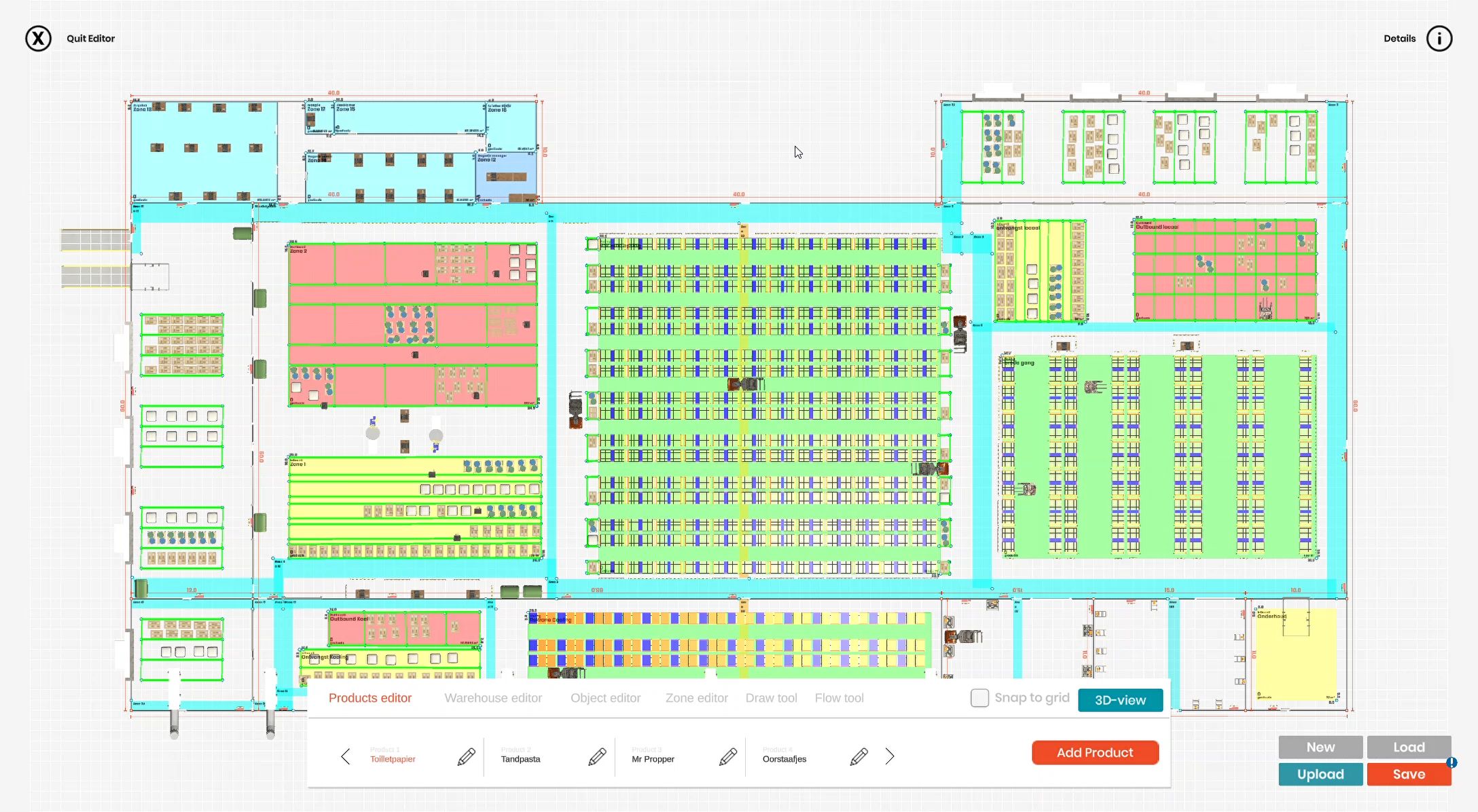
Drag-and-drop interface for placing racks, equipment, and infrastructure. No CAD training required—if someone can arrange furniture in a room, they can design a warehouse layout. Pre-built asset libraries include standard racking systems, material handling equipment, and warehouse infrastructure, all sized to industry standards.
-
Multiple Viewing Modes
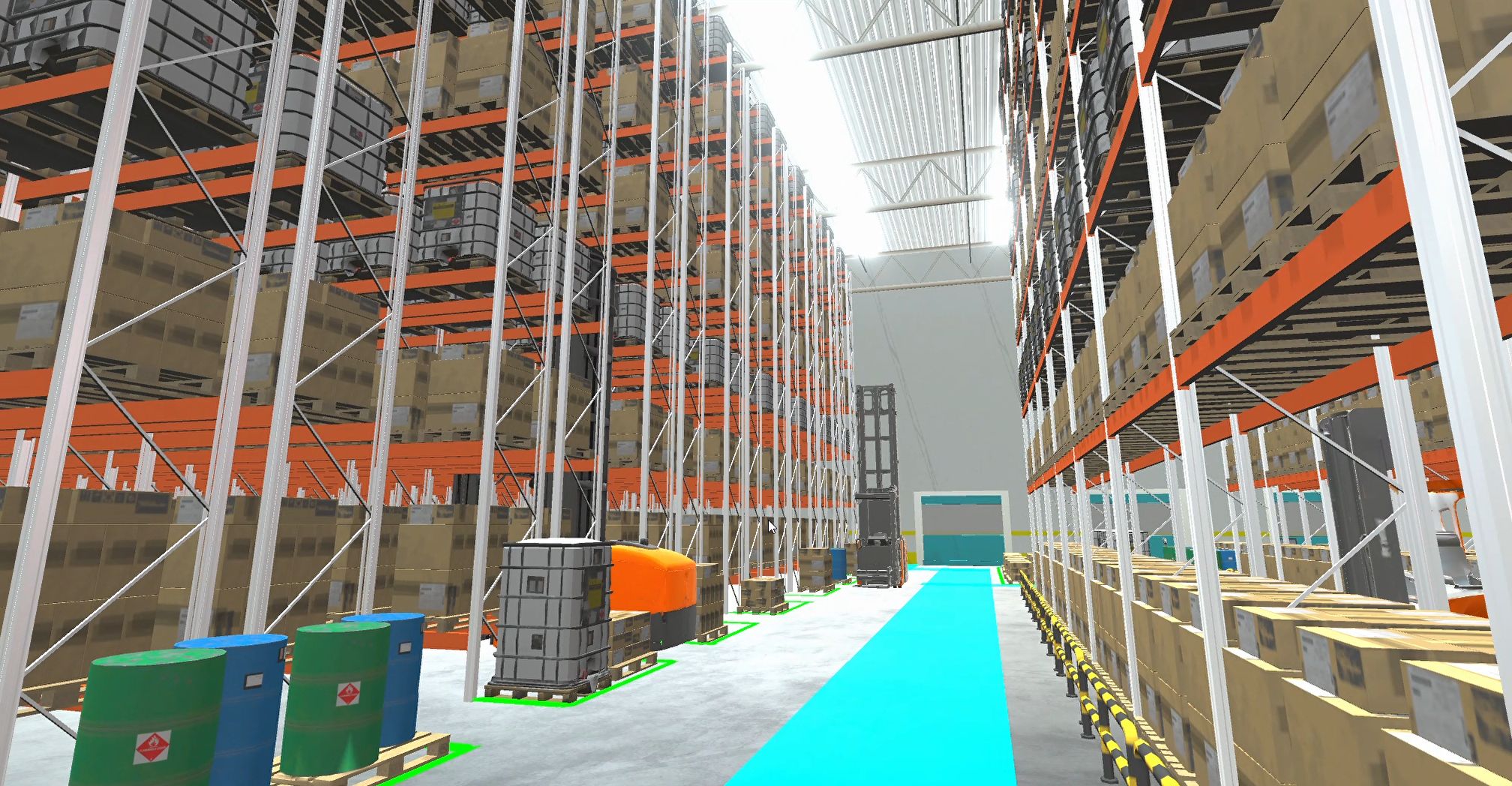
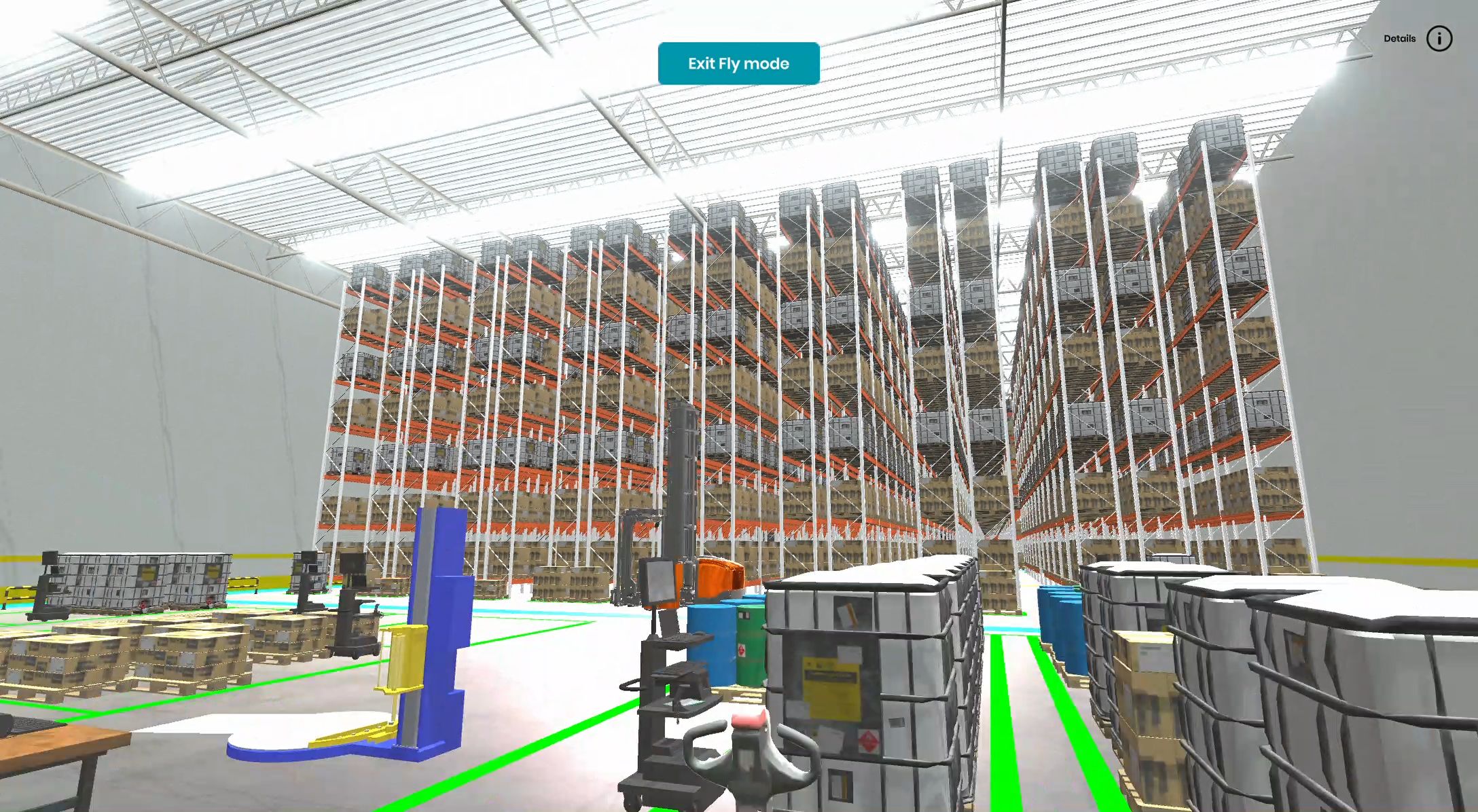
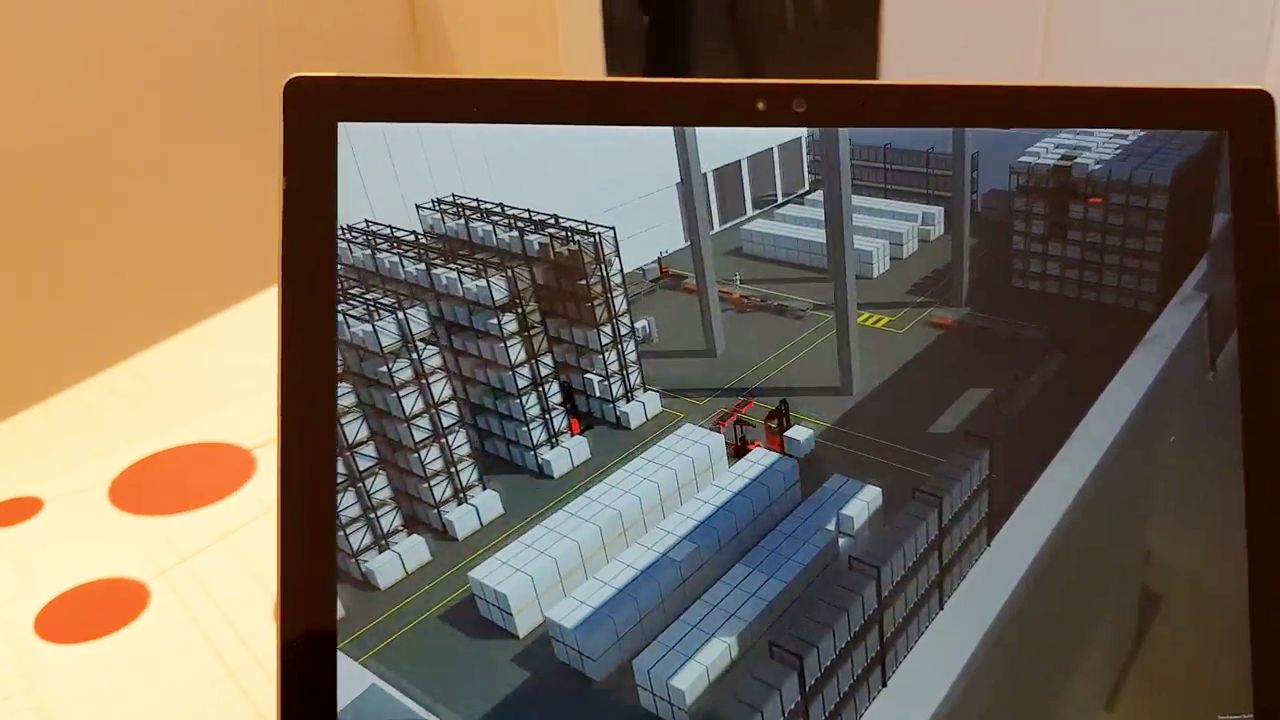
2D planning view, 3D visualization, and immersive VR walkthrough. Start with bird's-eye planning to establish the layout logic, switch to 3D to understand spatial relationships and sight lines, then step into VR to experience the warehouse at human scale. Each view reveals insights the others miss, creating a complete understanding before any physical construction begins.
-
Real-time Collaboration
Multiple stakeholders can view and discuss the same model. Sales, engineering, and customers see changes instantly as they're made, eliminating the "telephone game" of traditional planning. Screen sharing and multi-user sessions mean remote stakeholders participate as effectively as those in the room, critical for global teams and distributed decision-makers.
-
Instant Alternatives
Compare different configurations without starting over. Save multiple versions of any design and switch between them in seconds to show how different equipment choices or layout strategies affect operations. What traditionally requires hours of rework now happens in real-time during the conversation, keeping momentum and engagement high.
-
Scale Accuracy
True-to-life dimensions for genuine spatial understanding. Every element maintains real-world proportions, from aisle widths to rack heights to turning radii. This precision means decisions made in Warehouse Builder translate directly to the physical warehouse—no surprises when the first forklift tries to navigate what looked fine on paper.
-
Export Capabilities
Share designs with CAD systems and planning tools. Generate professional documentation including plan views, 3D renderings, and bills of materials. Seamless integration with existing workflows means Warehouse Builder enhances rather than replaces current tools, protecting previous technology investments while adding visual intelligence to the process.
Business Impact
Early adopters report significant improvements across three critical metrics. These gains come from one simple change: when everyone can see and experience the proposal, consensus builds naturally.
Thomas More University's supply chain program reports that students using Warehouse Builder move from theory to practical application in days rather than months. Graduates enter the workforce already fluent in visual planning—a skill their employers increasingly demand.
-
Sales Cycle Acceleration
- 40% reduction in time from initial meeting to signed proposal
- 60% fewer revision rounds required
- 3x higher close rate when VR walkthrough included
-
Risk Mitigation
- 75% of layout issues identified before detailed design phase
- 90% reduction in customer-requested changes post-contract
- 50% decrease in "surprise" problems during implementation
-
Stakeholder Alignment
- Average meeting time reduced from 3 hours to 90 minutes
- Decision-maker confidence scores increased by 2.3x
- Cross-functional approval time cut by 60%
-
Education & Training Excellence
- 85% better spatial reasoning scores for supply chain students
- 2x faster comprehension of warehouse flow concepts
- 70% increase in student engagement versus traditional methods
- 30% reduction in time to certification completion

Use Case - Sales Teams
The shift is psychological as much as technological. Customers move from evaluating your proposal to co-creating their solution. They own it before they've bought it.
Sales rep presents static drawings → Customer asks questions → Sales takes notes → Engineering revises → Repeat cycle 4-5 times → Maybe close deal
With Warehouse Builder:
Meeting Hour 1: Build initial layout together on screen
Meeting Hour 2: Adjust based on customer input in real-time
Meeting Hour 3: Customer puts on VR headset, walks their future warehouse
Result: Verbal commitment same day, formal proposal follows with confidence
Educational Applications
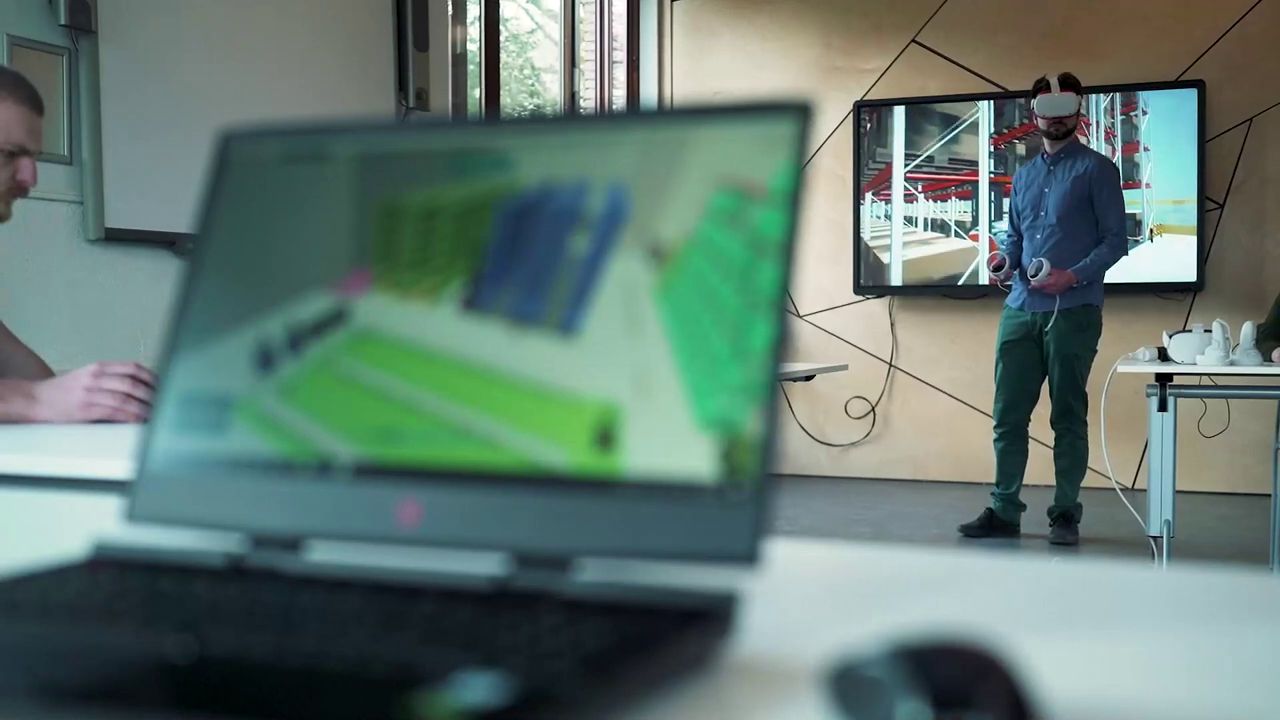
Educational institutions face a particular challenge in warehouse operations training: the impossibility of providing every student with hands-on experience in multiple warehouse configurations. Traditional teaching methods—lectures, diagrams, and occasional site visits—create a gap between theoretical knowledge and practical application.
Warehouse Builder addresses this pedagogical challenge through practical, scalable learning environments:
- Exploratory Learning Environments: Students experiment with layout decisions and immediately observe consequences
- Comparative Analysis Tools: Side-by-side evaluation of different design philosophies
- Safe Failure Space: Students learn from mistakes without real-world consequences
- Scalable Access: Entire classes work simultaneously on individual projects
Thomas More University reports that students using Warehouse Builder demonstrate 85% better spatial reasoning in warehouse design tasks and complete certification requirements 30% faster than traditional cohorts.

Strategic Perspective
Warehouse Builder represents more than a planning tool—it's a competitive differentiator that transforms how organizations approach warehouse design and stakeholder engagement.
Organizations adopting visual planning tools report that the cultural shift—toward more collaborative, transparent planning—often delivers more value than the tool itself.
Three Strategic Advantages:
-
Customer Experience Excellence
Transform sales from presentation to collaboration, dramatically improving win rates and customer satisfaction.
-
Operational Efficiency
Reduce planning cycles, minimize rework, and catch problems early when they're inexpensive to fix.
-
Talent Development
Prepare workforce for increasingly complex warehouse environments through practical, hands-on training.
Implementation Pathway
Most organizations see positive ROI within the pilot phase, with full value realization by month six. Here's the typical rollout:
-
Week 1-2: Foundation
- Initial setup and configuration
- Core team training (4-6 people)
- First practice project
-
Week 3-4: Pilot
- Select 2-3 real projects
- Apply tool with support
- Gather feedback and adjust
-
Week 5-8: Expansion
- Train extended team
- Develop best practices
- Create template library
-
Month 3+: Optimization
- Measure impact metrics
- Refine workflows
- Scale successful approaches
FAQ's of Warehouse Builder
Need more clarity?
Still have questions?
Here are a few common questions about warehouse builder.
What's the real ROI timeline for this investment?
Most organizations see initial ROI within 60-90 days through shortened sales cycles and reduced revision rounds. Full payback typically occurs within 6-8 months. The largest returns come from deals you win that you would have lost, and problems you catch early rather than late.
How does this affect our competitive position?
Visual planning is becoming table stakes in warehouse sales and design. Early adopters report winning projects specifically because competitors still use static presentations. More importantly, customers who co-create solutions with you become significantly less price-sensitive and more likely to expand engagements.
What's the risk if our teams don't adopt this?
Minimal. The tool requires no technical expertise and pilots typically show adoption rates above 90%. The bigger risk is opportunity cost, every month you delay is another month competitors can differentiate with visual selling while you rely on traditional methods.
Can this scale across our entire organization?
Yes. Start with one high-impact team (usually sales or education), prove value, then expand. The same platform works for sales demos, engineering reviews, customer workshops, and training programs. Most enterprises achieve full deployment within 6 months.
How do we measure success beyond anecdotal feedback?
Track four metrics: sales cycle length, customer decision confidence (surveyed), revision cycles per project, and post-implementation change requests. Our clients typically see 40% improvement in at least three of these within the first quarter.
What happens when customers want changes during the VR walkthrough?
That's exactly when you want them. Changes during the planning phase cost nothing but time. Changes after contracts are signed cost reputation and margin. The ability to iterate in real-time during meetings transforms objections into collaboration.
Should we build this capability internally or partner?
Partner first, internalize later if needed. The technology isn't your differentiator; how you apply it is. Starting with a proven platform lets you focus on customer value while avoiding the 18-24 month development cycle and ongoing maintenance burden of custom solutions.
What if VR technology isn't mature enough for our industry?
Warehouse Builder works perfectly without VR—the 3D visualization on standard screens delivers 80% of the value. VR is an enhancement, not a requirement. Many clients run successful programs using only the screen-based planning and 3D views, adding VR when stakeholders are ready.
Ready to Transform How Customers Experience Your Solutions?
Whether you need to engage prospects more deeply at trade shows, close deals faster in the field, or demonstrate expertise through innovative tools, Warehouse Builder shows what's possible when complex spatial solutions become interactive experiences.
Contact Us to see how we can apply this approach to your marketing, sales, and customer experience strategy.